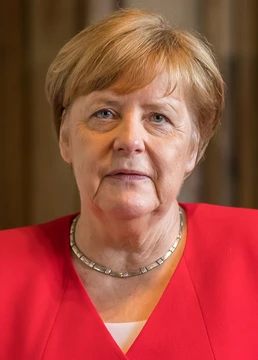
Enoch Powell
Politician, classicist, and controversial figure in British immigration debate.
John Enoch Powell (16 June 1912 – 8 February 1998) was a British politician, scholar, soldier and writer. He served as a Conservative Member of Parliament for Wolverhampton South West from 1950 to February 1974, and later as an Ulster Unionist Party MP for South Down from October 1974 to 1987. He held the office of Minister of Health from 1960 to 1963 and was Shadow Secretary of State for Defence from 1965 to 1968. Powell is most widely remembered for his 1968 'Rivers of Blood' speech, which criticized immigration from Commonwealth nations and sparked lasting controversy.
- born
- 16 June 1912, Stechford, Birmingham
- died
- 8 February 1998, aged 85
- field
- Politics, classical scholarship, poetry
- nationality
- British
- known_for
- Rivers of Blood speech (1968), opposition to Race Relations Bill, classical scholarship
Lore & Background
Enoch Powell was the only child of a primary school headmaster and grew up in Birmingham. He was a precocious student, learning Greek at age 13 and winning a scholarship to Trinity College, Cambridge. At Cambridge he became known as 'The Hermit of Trinity' for his intense study, winning numerous prizes including the Porson Prize and the First Chancellor's Classical Medal. He published his first academic paper at age 18 and later learned Urdu, Welsh, modern Greek, and Portuguese.
In 1937, at age 25, Powell was appointed Professor of Greek at the University of Sydney, becoming the youngest professor in the British Empire. He published a Lexicon to Herodotus in 1938 and revised Thucydides's Historiae. At the outbreak of the Second World War, he returned from Australia to enlist as a private in the Royal Warwickshire Regiment, eventually reaching the rank of brigadier.
After the war, Powell entered politics as a Conservative MP. His 1968 'Rivers of Blood' speech led to his dismissal from the Shadow Cabinet by Edward Heath. He later endorsed the Labour Party in the February 1974 election and returned to Parliament as an Ulster Unionist MP for South Down, serving until 1987.
Reader's Guide
Enoch Powell remains a deeply divisive figure in British history. His 1968 'Rivers of Blood' speech, which criticized immigration from Commonwealth nations and opposed the Race Relations Bill, prompted his dismissal from the Shadow Cabinet but was supported by a majority of the British public according to polls at the time. The speech and his subsequent political realignment—endorsing Labour in 1974 and serving as an Ulster Unionist MP—underscore his complex legacy. As a classical scholar, his Lexicon to Herodotus is a lasting academic contribution. Powell's career illustrates the intersection of high scholarship, military service, and polarizing political activism. His views on immigration and demographic change continue to be cited in debates on race and national identity.
Did You Know?
- At age 25, Powell became the youngest professor in the British Empire when appointed Professor of Greek at the University of Sydney.
- He learned Urdu because he felt knowledge of an Indian language was necessary to achieve his ambition of becoming Viceroy of India.
- Powell's first academic paper, written in German, was published when he was 18.
- He was known as 'The Hermit of Trinity' during his time at Cambridge due to his reclusive study habits.
More in European Prime Ministers And Chancellors 1-19
Spotted an error? Know more?
This is a living reference — every entry is fact-audited, and reader corrections feed straight into our audit queue. Suggest an edit · See this site's audit record