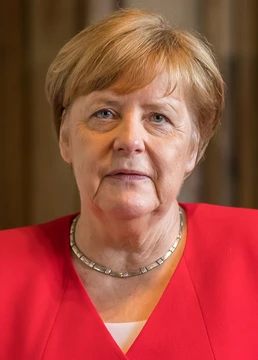
Aleksander Kwaśniewski
Polish president who led Poland into NATO and the EU.

Wikipedia / Wikimedia Commons
Aleksander Kwaśniewski, born 15 November 1954, is a Polish politician and journalist who was the 3rd president of the Third Republic of Poland, holding office from 1995 to 2005. During the 1980s, he served as a minister in the communist government. He later headed the post-communist centre-left Social Democracy of the Republic of Poland, which succeeded the former ruling Polish United Workers' Party, and was a co-founder of the Democratic Left Alliance. His time in office saw the modernisation of Poland, a doubling of the country's GDP over ten years, the creation of a new constitution in 1997, and Poland joining NATO in 1999 and the European Union in 2004. In 2004, he helped negotiate a pro-democratic agreement during Ukraine's Orange Revolution. A 2020 poll by Rzeczpospolita found that a plurality of Poles considered him the best president since 1989.
- known_for
- 3rd president of the Third Republic of Poland (1995–2005); oversaw NATO and EU accession
Lore & Background
Kwaśniewski was born in Białogard and studied Transport Economics and Foreign Trade at the University of Gdańsk from 1973 to 1977, though he never graduated. He joined the ruling Polish United Workers' Party in 1977 and remained a member until its dissolution in 1990. He was an activist in the communist student movement, serving as editor-in-chief of the student weekly ITD and later the daily Sztandar Młodych. He was Minister for Youth Affairs from 1985 to 1987 and held other government posts, including chairman of the government Social-Political Committee. He participated in the Round-Table negotiations and co-chaired the task group for trade-union pluralism. After the PZPR dissolved, he became a founding member and first chairman of the Social Democratic Party of the Republic of Poland and a founding member of the Democratic Left Alliance.
Kwaśniewski won the 1995 presidential election with 51.7% of the vote in the run-off, defeating incumbent Lech Wałęsa. His victory was disputed, and a court confirmed he had lied about his education in registration documents, though he was not penalized. He resigned from the SLD after the election, hoping to be seen as 'the president of all Poles.' He was re-elected in 2000 in a decisive first-round victory with 53.9% of the vote. During his presidency, Poland's GDP doubled, a new constitution was enacted in 1997, and Poland joined NATO in 1999 and the European Union in 2004. He also mediated in the Orange Revolution in Ukraine in 2004.
Reader's Guide
Aleksander Kwaśniewski's significance lies in his role as a post-communist leader who guided Poland through a period of rapid modernization and integration with Western institutions. His presidency saw the drafting and approval of a new constitution, replacing the modified communist-era document, and the successful accession to both NATO and the European Union, fulfilling key national goals. He also brokered a pro-democratic agreement during the Orange Revolution in Ukraine. Despite controversy over his educational claims and his past in the communist government, he maintained high popularity, with support often over 50% and reaching as high as 80%. A 2020 poll by Rzeczpospolita found that a plurality of Poles considered him the best president in post-1989 history. His legacy is that of a pragmatic leader who balanced continuity with change, advancing Poland's place in Europe while managing domestic political coalitions.
Did You Know?
- Kwaśniewski never graduated from the University of Gdańsk, where he studied Transport Economics and Foreign Trade.
- He was associated with Bajtek, the first computer-science periodical in Poland, which launched in 1985, though his role as co-founder is disputed.
- He was re-elected in 2000 in a single round, the only time since the end of Communism that a Polish presidential election was decided in the first round.
- According to a 2020 poll by Rzeczpospolita, he was considered the best president in post-1989 Poland by a plurality of Poles.
More in European Prime Ministers And Chancellors 1-19
Spotted an error? Know more?
This is a living reference — every entry is fact-audited, and reader corrections feed straight into our audit queue. Suggest an edit · See this site's audit record