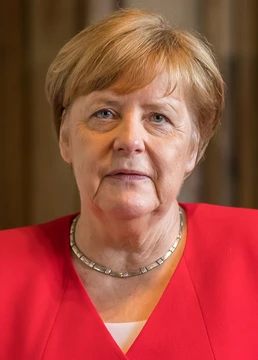
Bettino Craxi
Italian prime minister and Socialist Party leader convicted for corruption.
Bettino Craxi was an Italian politician and statesman who served as the 45th prime minister of Italy from 1983 to 1987. He was the first member of the Italian Socialist Party (PSI) to become prime minister and led what was at the time the fourth-longest government in the Italian Republic. Craxi is considered one of the most influential politicians of Italy, though his legacy is marred by corruption convictions.
- born
- 24 February 1934, Milan, Italy
- died
- 19 January 2000
- field
- Politics
- nationality
- Italian
- known_for
- Prime Minister of Italy, leader of the Italian Socialist Party
Lore & Background
Craxi was born in Milan on 24 February 1934 to a Sicilian lawyer father and a housewife mother. During World War II, he was sent to a boarding school run by nuns for safety. After the war, his father became vice-prefect in Milan and later prefect in Como. Craxi joined the PSI at age 17 after campaigning for his father in the 1948 general election.
Craxi rose quickly in politics, becoming a city councillor in Sant'Angelo Lodigiano in 1956 and in Milan in 1960. He was elected to the Chamber of Deputies in 1968. In 1976, after the PSI suffered a crushing electoral defeat, Craxi was appointed National Secretary of the party. He distanced the Socialists from the Communists and formed alliances with centrist parties. During the 1978 kidnapping of Aldo Moro by the Red Brigades, Craxi was one of the few leaders to support a humanitarian solution.
Craxi was convicted for political corruption and illicit financing of the PSI during the Mani pulite investigations. He admitted to illegal funding but rejected corruption charges. Craxi maintained strong links with Western European left leaders and pursued an assertive foreign policy that often confronted the United States on issues like Palestinian territories and relations with Arab socialist governments.
Reader's Guide
Bettino Craxi's significance lies in his role as the first Socialist prime minister of Italy and his leadership of the PSI from 1976 to 1993. He led the fourth-longest government in the Italian Republic and is considered one of the country's most influential politicians. His tenure marked a shift in Italian politics, as he moved the Socialists away from the Communists and into centrist alliances. Craxi's foreign policy was assertive and often clashed with the United States, particularly regarding Palestinian territories and Arab socialist governments. However, his legacy is deeply controversial due to his conviction for political corruption and illicit party financing during the Mani pulite investigations. While he admitted to illegal funding, he always rejected charges of corruption. His close ties with media magnate Silvio Berlusconi also shaped Italian politics. Craxi's supporters praise his foreign policy and his role in modernizing the PSI, while detractors focus on the corruption scandals that tarnished his reputation.
Did You Know?
- Craxi was nicknamed 'il Cinghialone' ('The Big Boar') by his long-time ally and rival Giulio Andreotti due to his physical size.
- He was the first PSI member to become prime minister of Italy.
- Craxi changed the PSI party logo to a red carnation in 1978, adopting it as a socialist symbol.
- He supported financially some socialist parties banned by dictatorships, including the Chilean Socialist Party of Salvador Allende in exile.
More in European Prime Ministers And Chancellors 1-19
Spotted an error? Know more?
This is a living reference — every entry is fact-audited, and reader corrections feed straight into our audit queue. Suggest an edit · See this site's audit record