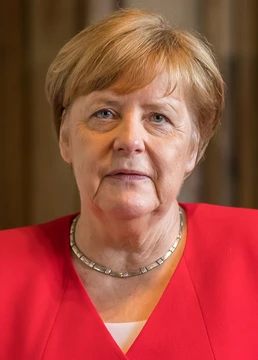
Alcide De Gasperi
Italian statesman who founded Christian Democracy and led postwar reconstruction.

Wikipedia / Wikimedia Commons
Alcide Amedeo Francesco De Gasperi (3 April 1881 – 19 August 1954) was an Italian politician who founded the Christian Democracy party and led Italy as prime minister through eight straight coalition governments from 1945 to 1953. He became prime minister in December 1945, after the monarchy had already been effectively sidelined, and later served as the first prime minister of the Italian Republic following the abolition of the monarchy in 1946. For a short time after Italians voted to abolish the monarchy, he also acted as provisional head of state. His eight-year tenure is a record for a modern Italian leader, and he ranks as the third longest-serving prime minister since Italy’s unification. A devout Catholic, De Gasperi is considered a founding father of the European Union, alongside figures like Robert Schuman, Jean Monnet, and Konrad Adenauer.
Born in 1881 in Pieve Tesino, Tyrol—then part of Austria-Hungary for over five centuries and now in Italy’s Trentino-Alto Adige region—De Gasperi grew up in a family of modest means; his father was a local police officer. He became active in the Social Christian movement in 1896. In 1900, he entered the Faculty of Literature and Philosophy in Vienna, where he helped start the Christian student movement, deeply influenced by Pope Leo XIII’s 1891 encyclical *Rerum novarum*. In 1904, he joined student protests demanding an Italian-language university. During the opening of an Italian Faculty of Law in Innsbruck, he was arrested with other students and held for twenty days. He earned a degree in philology in 1905.
That year, he began working as an editor for *La Voce Cattolica*, which became *Il Trentino* in September 1906, and he soon served as its editor. Through the newspaper, he advocated for cultural autonomy for Trentino and defended Italian culture against Germanisation efforts by German nationalists in Tyrol. Unlike some contemporaries, such as Cesare Battisti, he did not push for unification with Italy at that time. From 1908 to 1912, he was vice-president and one of three executive board members of the Banca Industriale di Trento, a local investment bank backed by the Catholic movement. In 1911, he was elected to the Austrian Reichsrat as a member of the Popular Political Union of Trentino, holding that seat for six years. At the outbreak of World War I, he remained politically neutral, supporting Pope B
- born
- 3 April 1881
- died
- 19 August 1954
- field
- Politics
- nationality
- Italian
- known_for
- Founding Christian Democracy party; eight successive coalition governments as prime minister (1945–1953); founding father of the European Union
Lore & Background
De Gasperi was born in 1881 in Pieve Tesino in Tyrol, then part of Austria-Hungary. He was active in the Social Christian movement from 1896 and studied in Vienna, where he helped found the Christian student movement. Inspired by the Rerum novarum encyclical, he participated in student demonstrations for an Italian-language university and was imprisoned for twenty days. After obtaining a degree in philology in 1905, he worked as editor of the newspaper Il Trentino, advocating cultural autonomy for Trentino. He served in the Austrian Reichsrat from 1911 and, during World War I, initially sympathized with peace efforts before siding with Italy.
In 1919, De Gasperi co-founded the Italian People's Party (PPI) and served as a deputy from 1921 to 1924. He initially supported Benito Mussolini's fir
Reader's Guide
Alcide De Gasperi's significance lies in his role as the dominant political figure in Italy during the critical postwar period, guiding the country from monarchy to republic and from fascism to democracy. His eight-year tenure as prime minister, a record of political longevity in modern Italian politics, saw Italy's reconstruction with American support through the Marshall Plan, its integration into NATO, and its early steps toward European unity as a founding father of the European Union. De Gasperi's leadership was marked by his ability to balance factions within the Christian Democracy party and to secure concessions from the Allies, such as the Gruber-De Gasperi Agreement with Austria in 1946, which established South Tyrol as an autonomous region. His legacy is that of a moderate, devout Catholic who opposed communism and helped shape Italy's postwar identity and its place in the Western alliance.
Did You Know?
- De Gasperi was imprisoned for twenty days in 1904 for participating in student demonstrations for an Italian-language university.
- He spent fourteen years working as a cataloger in the Vatican Library from 1929 until the collapse of Fascism in July 1943.
- He served as provisional head of state for sixteen days in June 1946 after the Italian people voted to end the monarchy.
- De Gasperi secured a US$100 million Eximbank loan during a ten-day visit to the United States in January 1947.
More in European Prime Ministers And Chancellors 1-19
Spotted an error? Know more?
This is a living reference — every entry is fact-audited, and reader corrections feed straight into our audit queue. Suggest an edit · See this site's audit record