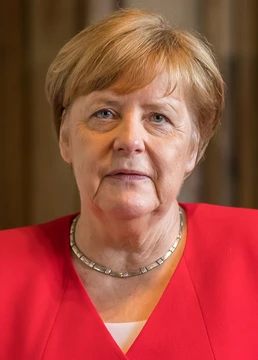
Bruno Kreisky
Austrian social democratic chancellor for 13 years, longest in republican history.
Bruno Kreisky (22 January 1911 – 29 July 1990) was an Austrian politician for the Social Democratic Party. He held the position of foreign minister from 1959 to 1966 and later served as chancellor from 1970 to 1983. His 13 years in office make his tenure the longest of any chancellor in republican Austria. He was a key figure in Western European social democracy and collaborated closely with West Germany’s Willy Brandt and Sweden’s Olof Palme within the Socialist International.
Kreisky was born in Vienna’s Margareten district. His father, Max (Markus) Kreisky, was a textile manufacturer, and his mother was Irene Kreisky, née Felix. Disturbed by the poverty and violence he witnessed in 1920s Austria, he joined the youth wing of the Social Democratic Workers' Party (SDAP) at age 15 in 1925. Two years later, he joined the Young Socialist Workers, going against his parents’ wishes. In 1929, on the advice of Otto Bauer, he began studying law at the University of Vienna instead of his original plan to study medicine. He remained politically active. In 1931, he left the Jewish religious community and became agnostic. During the 1934 February Uprising, he worked as a courier. After the Socialist Party was banned by the Dollfuss dictatorship that same year, he engaged in underground political work. He was arrested in 1935 and sentenced to one year in prison for these activities. Following the Anschluss in March 1938, when Austria was incorporated into Germany, Kreisky fled Nazi persecution of Jews and the coming Holocaust by emigrating to Sweden in September 1938, where he stayed until 1945. He married Vera Fürth on 23 April 1942; they had a son and a daughter. While in exile, he worked as a journalist and led the Austrian Socialists in Sweden.
He returned to Austria in May 1946 but soon went back to Stockholm, assigned to the Austrian legation. In 1950, he returned to Vienna, where President Theodor Körner made him Assistant Chief of Staff and political adviser. In 1953, he became Undersecretary in the Foreign Affairs Department of the Austrian Chancellery, a role in which he helped negotiate the 1955 Austrian State Treaty that ended the four-power occupation and restored Austria’s independence and neutrality.
Kreisky was elected to the Nationalrat (Austrian parliament) as a Socialist in the 1956
- born
- 22 January 1911
- died
- 29 July 1990
- field
- Politics
- nationality
- Austrian
- known_for
- Longest-serving chancellor of republican Austria; first Jewish chancellor of Austria; liberal reforms
Lore & Background
Bruno Kreisky was born in the Margareten district of Vienna in 1911. Shocked by poverty and violence in the 1920s, he joined the youth wing of the Social Democratic Workers' Party (SDAP) in 1925. He studied law at the University of Vienna, took part in the 1934 February Uprising, and was arrested in 1935 for underground political work. After the Anschluss in 1938, he emigrated to Sweden, where he remained until 1945, working as a journalist and heading the Austrian Socialists in Sweden. He returned to Austria in 1946 but soon went back to Stockholm for the Austrian legation. In 1953, he became Undersecretary in the Foreign Affairs Department and helped negotiate the 1955 Austrian State Treaty. He was elected to parliament in 1956 and became foreign minister in 1959, a post he held until 1966. In 1967, he was elected chairman of the Social Democratic Party. As chancellor from 1970 to 1983, Kreisky appointed four politicians with Nazi backgrounds to his cabinet over the course of his tenure.
Reader's Guide
Bruno Kreisky's significance lies in his long tenure as chancellor and his role in shaping modern Austria. His government pursued liberal reforms, including legalizing abortion in the first three months, decriminalizing homosexuality, and granting equal rights to children born out of wedlock. He reduced mandatory military service, expanded employee benefits, cut the workweek to 40 hours, and passed equality legislation for women. His government established language rights for Slovene and Croatian minorities and expanded university education. Kreisky supported European integration despite the State Treaty preventing EU membership. He was a supporter of Palestinian statehood and had poor relations with Israeli leaders Menachem Begin and Golda Meir, while cultivating ties with Arab leaders. His legacy is also marked by controversy: he appointed four former Nazis to his cabinet and had a bitter conflict with Nazi hunter Simon Wiesenthal, whom he accused of using mafia methods and called a former Gestapo agent based on fake documents. Kreisky's approach to former Nazis and far-right figures like Jörg Haider remains a subject of debate.
Did You Know?
- Kreisky was the oldest chancellor after World War II, aged 72 when he left office.
- He was Austria's first Jewish chancellor.
- He legalized abortion in the first three months of pregnancy and decriminalized homosexuality.
- He appointed four politicians with Nazi backgrounds to his cabinet after the 1970 election.
More in European Prime Ministers And Chancellors 1-19
Spotted an error? Know more?
This is a living reference — every entry is fact-audited, and reader corrections feed straight into our audit queue. Suggest an edit · See this site's audit record