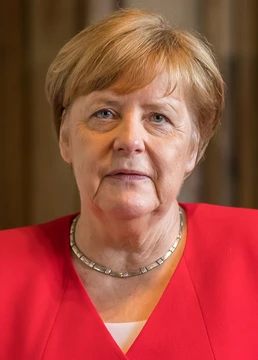
Davíð Oddsson
Iceland's longest-serving prime minister and controversial central bank chief.
Davíð Oddsson was an Icelandic politician who served as the longest-serving prime minister of Iceland from 1991 to 2004. He was a central figure in Icelandic politics for decades, known for his role in economic liberalization and privatization, as well as for his controversial involvement in the events leading up to the 2008–2011 Icelandic financial crisis.
- born
- 17 January 1948
- died
- 1 March 2026
- field
- Politics
- nationality
- Icelandic
- known_for
- Longest-serving prime minister of Iceland; role in the 2008 financial crisis
Lore & Background
Davíð Oddsson was born in Reykjavík on 17 January 1948. His father was a doctor and his mother a secretary; his parents were not married, and he was raised in his maternal grandfather's home in Selfoss until his grandfather died, after which he moved with his mother and grandmother to Reykjavík. He attended the gymnasium Menntaskólinn í Reykjavík, graduating in spring 1970, and later read law at the University of Iceland while working nearly full-time. He was elected to the Municipal Council in Reykjavík in 1974 for the Independence Party.
Davíð served as Mayor of Reykjavík from 1982 to 1991, during which he reduced the number of council members, privatized municipal assets including the largest fishing firm, and oversaw the building of Reykjavík City Hall and Perlan. He became chairman of the Independence Party in 1991 and formed a coalition government with the Social Democrats, later with the Progressive Party. His governments pursued privatization, tax cuts, and monetary stabilization, and he strongly supported the Iraq War and NATO. After serving as prime minister until 2004, he became foreign minister from 2004 to 2005, then chaired the board of governors of the Central Bank of Iceland from 2005 to 2009.
Reader's Guide
Davíð Oddsson's significance lies in his long tenure as prime minister and his role in reshaping Iceland's economy through neoliberal policies, including privatization and tax cuts. However, his legacy is deeply contested due to his part in the 2008–2011 financial crisis, which led to public demands for his resignation from the Central Bank and his replacement in March 2009. Time named him one of the 25 people most to blame for the crisis worldwide. After leaving the central bank, he became editor of Morgunblaðið in September 2009, a decision that sparked nationwide controversy, resignations, and terminated subscriptions. He ran for President of Iceland in 2016, finishing fourth with 13.7% of the vote. His career reflects both the heights of Icelandic political success and the depths of public backlash during a national economic disaster.
Did You Know?
- Davíð Oddsson was one of the 25 people Time named as most to blame for the 2008 financial crisis worldwide.
- He was hired as editor of Morgunblaðið in September 2009, causing nationwide controversy and widespread subscription cancellations.
- He came in fourth place with 13.7% of the popular vote in the 2016 Icelandic presidential election.
- As mayor, he reduced the Reykjavík Municipal Council from 21 to 15 members.
More in European Prime Ministers And Chancellors 1-19
Spotted an error? Know more?
This is a living reference — every entry is fact-audited, and reader corrections feed straight into our audit queue. Suggest an edit · See this site's audit record