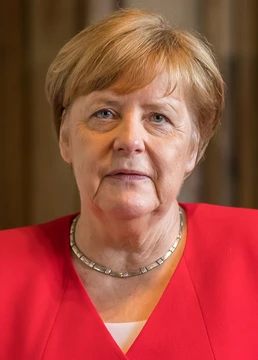
Donald Tusk
Polish politician and historian, three-time prime minister.
Donald Franciszek Tusk was born on 22 April 1957 in Gdańsk, a city he describes as a "frontier town" where ethnic lines blurred. His background is a mix of Polish, German (through his maternal grandmother, who spoke Danzig German), and Kashubian heritage; he identifies as Polish, Kashubian, and European. His father was a carpenter, his mother a nurse, and his paternal grandfather—a luthier and railway worker—was imprisoned in the Neuengamme concentration camp, forcibly conscripted into the Wehrmacht, defected, and later fought with the Polish Armed Forces in the West. Tusk recalls his communist-era youth as "hopelessly" monotonous and himself as a "typical hooligan" who roamed the streets looking for fights. His interest in politics sparked when he witnessed striking workers clash with riot police. He studied history at the University of Gdańsk, graduating in 1980, and was active in the Student Committee of Solidarity against the communist regime.
Tusk entered official politics in 1989 as a co-founder of the free-market Liberal Democratic Congress (KLD). He first won a seat in the Sejm in 1991 but lost it in 1993. In 1994, the KLD merged with the Democratic Union to form the Freedom Union, where Tusk became deputy chairman. He was elected to the Senate in 1997 and served as its deputy marshal. In 2001, he co-founded the centre-right liberal conservative Civic Platform (PO) and returned to the Sejm as deputy marshal. He ran unsuccessfully for president in 2005 and also lost the parliamentary election that year.
Leading the PO to victory in the 2007 parliamentary election, Tusk became prime minister. He won a second term in 2011, making him the first Polish prime minister re-elected since the fall of communism. In 2014, he left Polish politics to become President of the European Council, a role he held until 2019. During his absence, the PO lost control of both the presidency and parliament to the rival Law and Justice (PiS) party in 2015. Tusk remained in Brussels as leader of the European People's Party from 2019 to 2022, then returned to Polish politics in 2021 to lead the Civic Platform again. In the 2023 election, his Civic Coalition won 157 seats, becoming the second-largest bloc. After the president-appointed prime minister, Mateusz Morawiecki, failed a confidence vote on 11 December, the Sejm elected Tusk prime minister for a third time. His cabinet
- born
- 22 April 1957
- field
- Politics, History
- nationality
- Polish
- known_for
- Longest-serving prime minister of the Third Polish Republic; co-founder of Civic Platform; President of the European Council
Lore & Background
Tusk was born and raised in Gdańsk, with Polish, German, and Kashubian origins. He studied history at the University of Gdańsk, graduating in 1980, and was active in the Student Committee of Solidarity. He co-founded the Liberal Democratic Congress (KLD), which won 37 seats in the 1991 elections. After the KLD merged into the Freedom Union, Tusk was elected to the Senate in 1997 and became its deputy marshal. In 2001, he co-founded Civic Platform and was again elected to the Sejm, becoming its deputy marshal. He stood unsuccessfully for President of Poland in 2005, losing to Lech Kaczyński in the second round.
Leading Civic Platform to victory in the 2007 parliamentary election, Tusk became prime minister. He won a second term in 2011, the first Polish prime minister re-elected since the fall of communism. In 2014, he left Polish politics to become President of the European Council, serving until 2019. He later returned to Polish politics in 2021, again leading Civic Platform. In the 2023 election, his Civic Coalition won 157 seats, and after the failure of the president-appointed prime minister to secure a vote of confidence, Tusk was elected prime minister for a third time, taking office on 13 December 2023.
Reader's Guide
Donald Tusk's significance lies in his long and influential career at the highest levels of Polish and European politics. As the longest-serving prime minister of the Third Polish Republic, he oversaw major infrastructure investments, particularly in highways for Euro 2012, and pursued digitization and reduction of the public sector. His first term was marked by a pragmatic, technocratic style, but his second term saw declining public support due to scandals, unfulfilled promises, and austerity policies during the European debt crisis. After the rise of the Law and Justice (PiS) party, Tusk became a key figure opposing what he considered democratic backsliding. Returning to power in 2023, he focused on judicial reform and warming relations with the European Union, while continuing aid to Ukraine after the Russian invasion. In 2024, he surprised observers by adopting right-wing themes on border security, including temporarily suspending the right of asylum for those crossing the Belarus–Poland border illegally. His legacy is that of a durable centrist leader who shaped Poland's post-communist trajectory and held a top European office.
Did You Know?
- Tusk's paternal grandfather, Józef Tusk, was imprisoned in the Neuengamme concentration camp from 1942 to 1944, then forcibly conscripted into the Wehrmacht before defecting to join the Polish Armed Forces in the West.
- Tusk was the first Polish prime minister to be re-elected since the fall of communism in 1989.
- During the 2005 presidential election, Tusk faced accusations that his grandfather had been a Nazi collaborator, which the BBC reported may have influenced some voters negatively.
- In 2024, Tusk temporarily suspended the right of asylum for those who illegally cross the Belarus–Poland border.
More in European Prime Ministers And Chancellors 1-19
Spotted an error? Know more?
This is a living reference — every entry is fact-audited, and reader corrections feed straight into our audit queue. Suggest an edit · See this site's audit record